Inside the cabin of a domestically developed C909 aircraft, surgeons from the Zhongshan Ophthalmic Center of Sun Yat-sen University carried out delicate eye procedures under a high-definition microscope, marking a new milestone in mobile healthcare.
On March 20, China's first fully self-developed and self-operated "flying eye hospital" completed its inaugural public welfare mission in south China's Hainan Province, where it conducted its first batch of public welfare surgeries.

The inauguration ceremony of the Hainan Free Trade Port vision care outreach program is held in Boao town, in Qionghai.
Liu Chenggong, Chair of the University Council, highlighted the strategic importance of this initiative. He noted that the deployment of the "flying eye hospital" represents a deep integration of SYSU’s premium medical resources with the development of the Hainan Free Trade Port.
"By bringing advanced medical equipment, expert teams, and a proven public welfare model to Hainan, we are not just providing immediate care, but planting the seeds for long-term growth," Liu stated. He emphasized that the initiative aims to build a high-level platform for ophthalmic cooperation that radiates across the globe.
Advanced Flying Eye Hospital in Service
At Bo'ao Qionghai Airport, the medical team carried out eight procedures for local patients, including complicated cataract procedures, macular buckling and intravitreal injections. For many elderly residents with limited mobility, access to top-tier ophthalmic care had long been difficult.
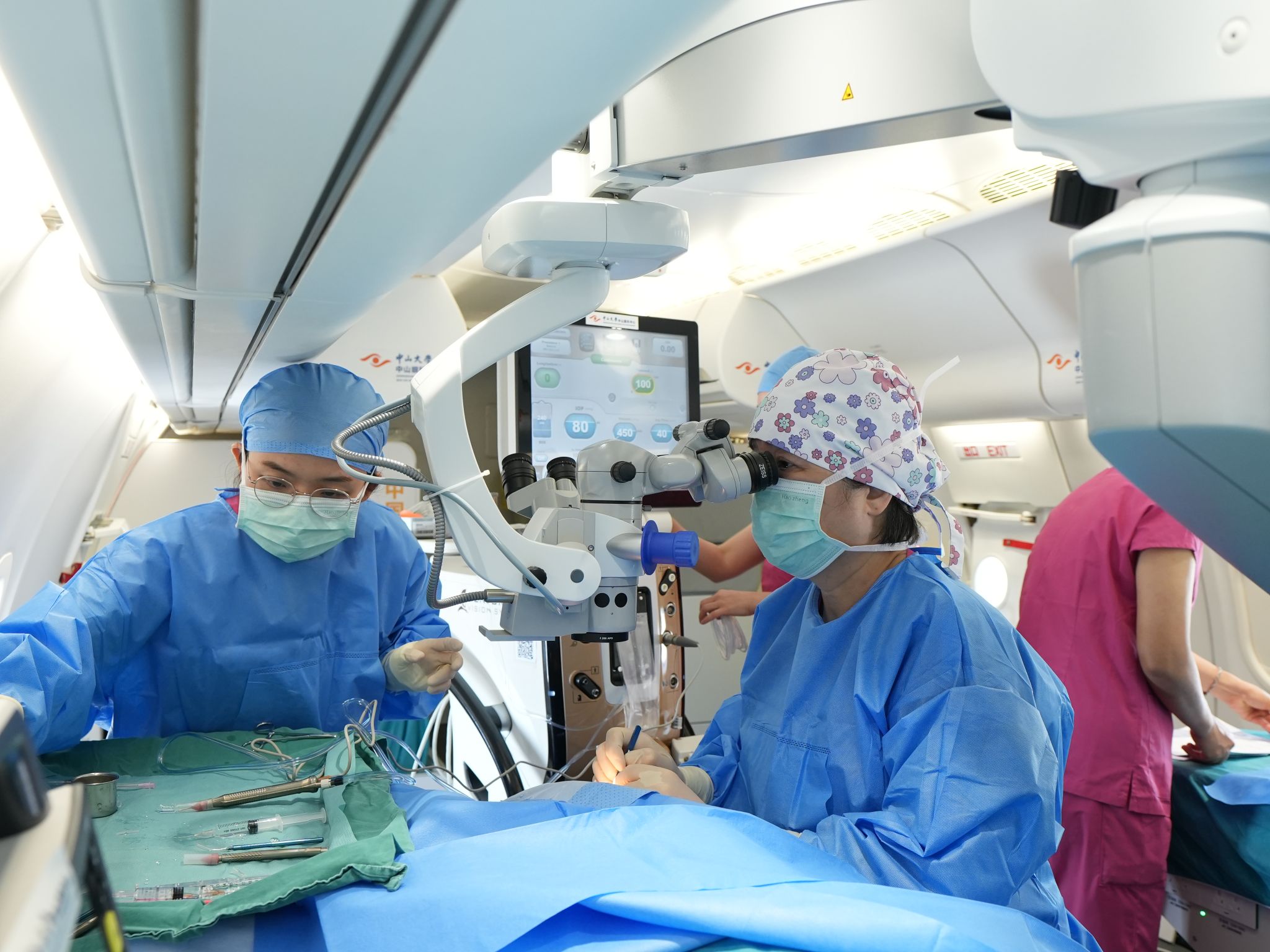
Chen Weirong, professor at the Zhongshan Ophthalmic Center of Sun Yat-sen University, performs a cataract surgery in the surgical cabin of the flying eye hospital.
The aircraft, jointly developed by the Zhongshan Ophthalmic Center, the Commercial Aircraft Corporation of China and China Flying Dragon General Aviation Company, is equipped with a fully functional surgical cabin. The interior is divided into waiting, preparation and operating areas, meeting the standards of a Class III Grade A hospital operating room.
The aircraft is capable of reaching remote and underserved regions. It has also obtained CCAR-135 operational certification, qualifying it for commercial medical transport and emergency rescue missions.
To support the airborne surgeries, a 5G Intelligent Ophthalmic Mobile Clinic was deployed in advance to rural communities, providing preliminary eye examinations for over 600 residents. Patients requiring surgery completed pre-operative checks locally before receiving treatment aboard the aircraft, forming an innovative "screening–local care–airborne surgery" model.

A 5G Intelligent Ophthalmic Mobile Clinic from the Zhongshan Ophthalmic Center provides one-stop screening services in rural communities.
Lin Haotian, director of the Zhongshan Ophthalmic Center, said the initiative is part of a broader effort to build an integrated air-space-land-sea eye health service system.
"By combining advanced aviation platforms with digital technologies such as 5G and AI-assisted diagnosis, we aim to improve efficiency and expand access to high-quality ophthalmic care," Lin said.
He added that the program will also focus on training local doctors and establishing standardized service models to create sustainable healthcare capacity in underserved areas.
Vision Without Borders
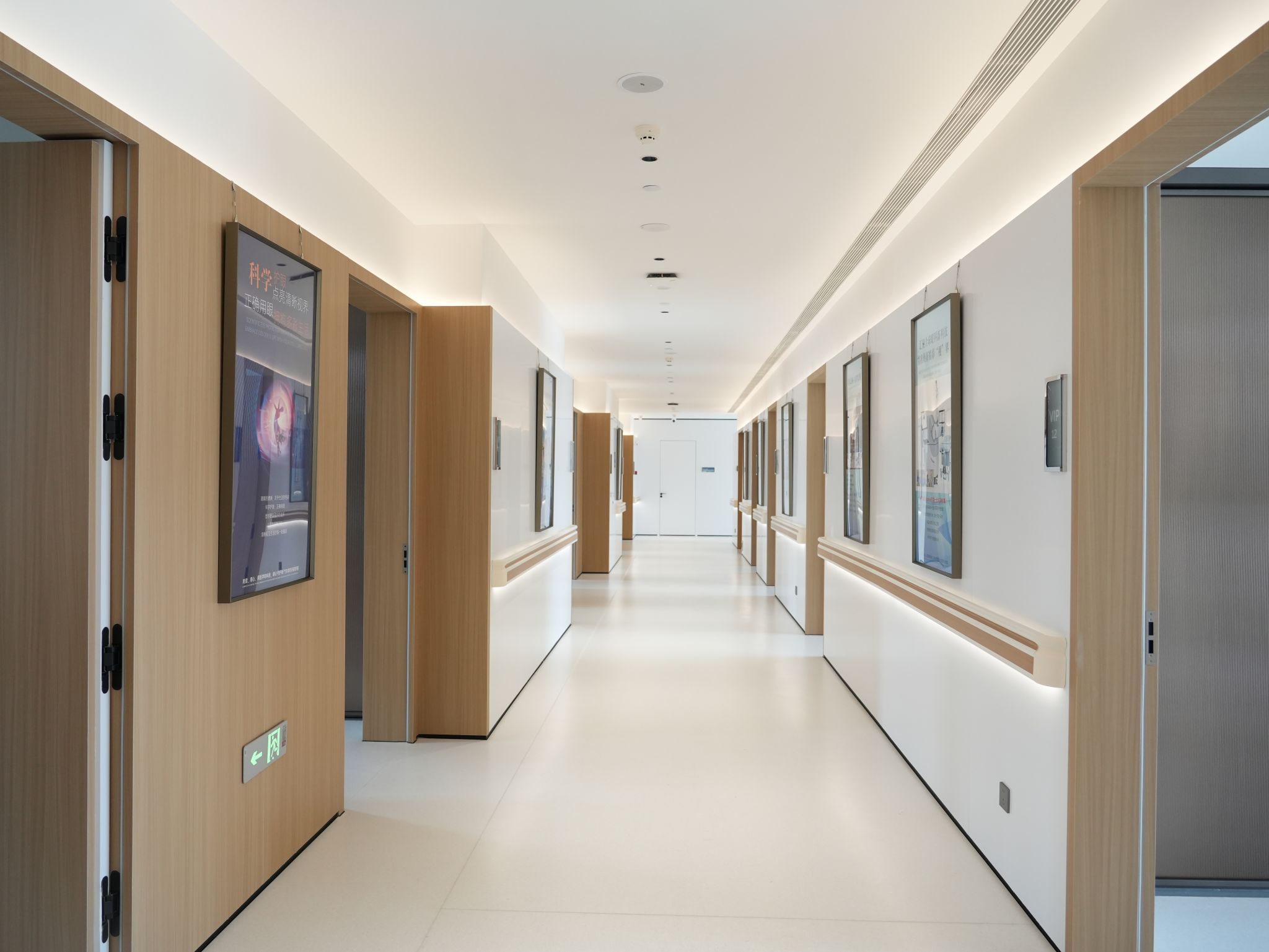
Alongside the maiden flight, the Hainan International Ophthalmic Service Program was officially launched at the Boao Lecheng International Medical Tourism Pilot Zone.

The launch ceremony of Hainan's international ophthalmic medical services
The program will serve as an international platform for advanced ophthalmic care and innovation, with initial demonstration projects including photodynamic therapy, ophthalmic gene therapy, international corneal transplantation, and artificial iris implantation. Soon, patients from across Southeast Asia will also have eye care service on air.

From Inspiration to Innovation
The launch carries deep historical resonance. In 1982, the Orbis International Flying Eye Hospital visited Guangzhou, delivering clinical training that inspired a generation of Chinese ophthalmologists.
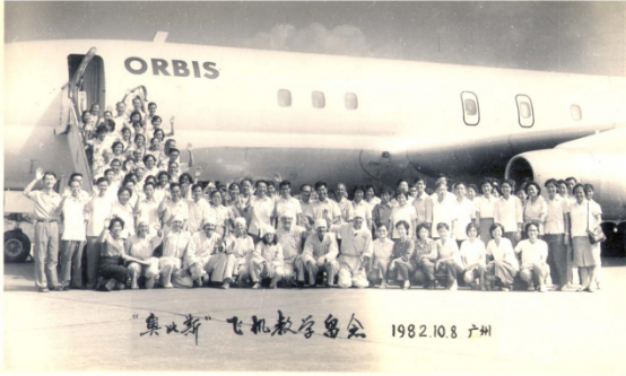
A group photo captures specialists from ORBIS Flying Eye Hospital and Chinese ophthalmologists during its inaugural flight to Guangzhou in 1982.
More than four decades later, that vision has become reality.
"Back then, we looked up to that aircraft. Today, we have built our own," Lin said, adding that the flying eye hospital will serve remote areas and support international blindness prevention efforts.
From the inspiration sparked by Orbis decades ago to the independent innovation of the C909 today, SYSU is redefining the boundaries of mobile healthcare.
As these "Wings of Light" prepare to soar toward Southeast Asia and beyond, we are committed to building a high-level platform for international cooperation in ophthalmic care, enabling world-class medical expertise to take root in every corner of the globe.